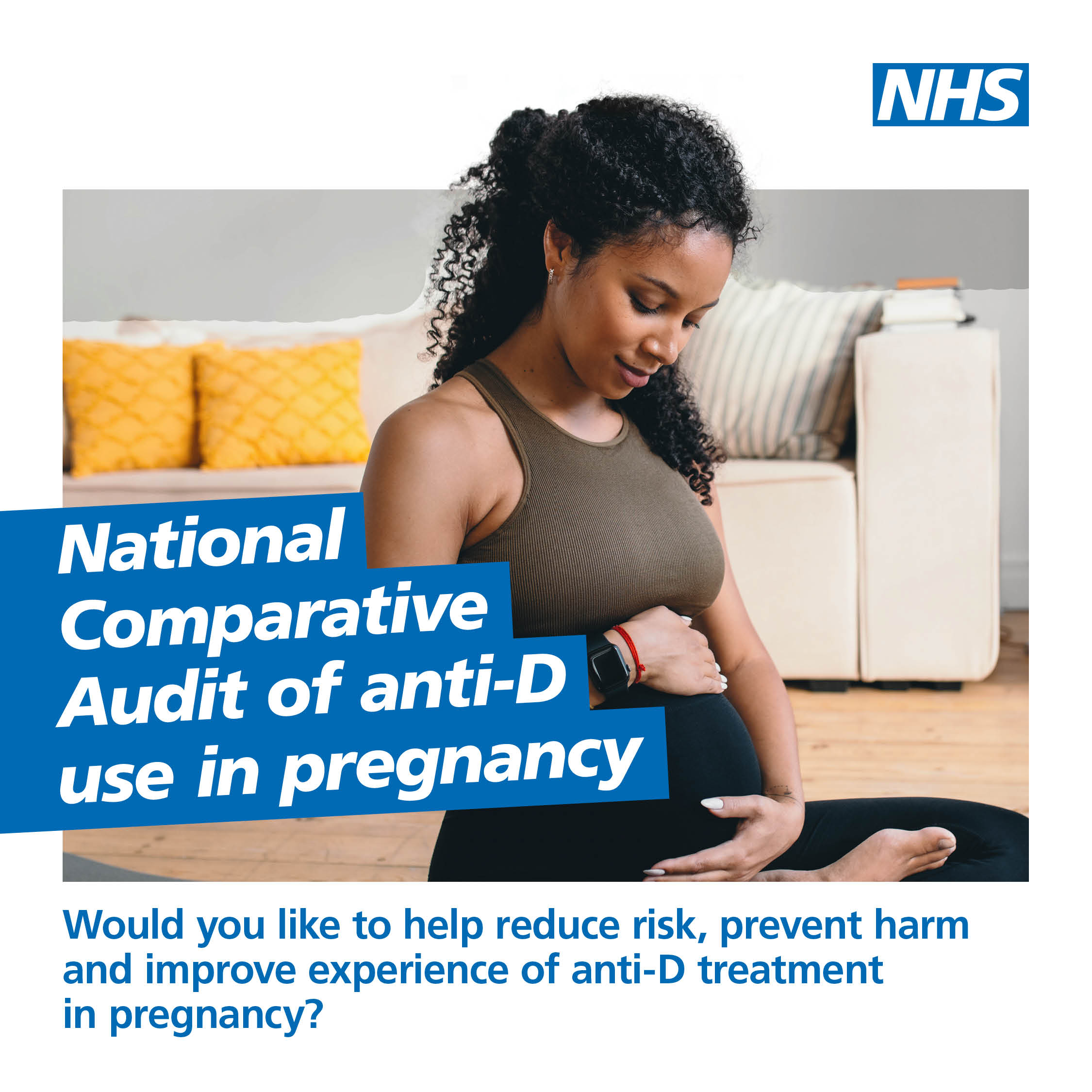
2026 National Comparative Audit of the use of prophylactic anti-D in pregnancy
Why NHS Blood and Transplant are conducting this audit
Despite longstanding national guidance, the release of a national safety alert, and availability of tools to support safe practice, Serious Hazards of Transfusion (SHOT) data continues to show high numbers of errors linked to anti-D administration. These include:
- missed or delayed doses
- incorrect eligibility assessments
- weaknesses in the documentation process
Each of these errors carries a real risk of RhD alloimmunisation, which safety measures aim to prevent, thereby reducing the risk of haemolytic disease in the fetus and newborn.
This audit aims to identify variation in local processes, and support hospitals to strengthen pathways, from risk assessment to administration, documentation, and follow-up, for both routine antenatal administration and in response to potentially sensitising events, including birth.
This will be a retrospective audit, looking at pregnant women and birthing people with RhD negative blood type who are not previously sensitised.
Audit details
- Data collection runs from 1 April to 30 June 2026
- The planned audit report date is 30 October
- Data collection will be via paper data collection forms, with the option to enter this data online or return these forms in the post
We recommend midwives collect data in this audit and be involved in the wider audit process. Midwife colleagues wishing to sign up for the audit should do one of the following:
- Get in touch with your transfusion team, they are familiar with our normal recruitment processes and will be able to sign you up
- Email the audit team at NCA@nhsbt.nhs.uk with details of your name, job role and the hospital/trust you would like to sign up
Your local clinical audit or governance team may require you to register the details of this national audit with them. The 2026 Anti-D audit registration document (PDF 43KB) provides all the information you need to register, and details what the audit will entail.
Why your participation matters
We invite all hospitals providing maternity care to take part. Join us in strengthening practice, improving outcomes, and ensuring every eligible person receives anti-D Ig safely and reliably.
Your participation is important, for the following reasons:
- It demonstrates your commitment to reducing preventable harm
- Your team can benchmark performance and highlight areas for improvement
- You will be supporting national learning that extends beyond local service improvement
- Provides evidence that your maternity and transfusion services are actively engaged in quality improvement
Page last updated: 9 January 2026